Agriculture

d5tid: 
2865

Hunger Surges in Haiti
  • Posted on: 31 October 2026
  • By: Bryan Schaaf

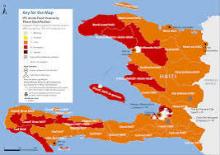
According to the U.N Food and Agriculture Organisation (FA), almost six million people in Haiti are facing severe hunger as a result of gang violence, displacement, high food and fuel prices, coupled with extreme weather that has negatively affected agriculture.  gang violence and displacement, combined with high food and fuel prices and an extreme El Niño weather phenomenon that is threatening food security.  Haiti is now dealing with a level of food insecurity amongst the highest in the world while the authorities are bogged down with trying to re-establish order and security in Port-au-Prince.  Without sufficient humanitarian assistance, food insecurity is expected to further deteriorate in the months ahead. The full article by AP jourrnalist Danica Coto follows. 

Timberland Explores Feasibility of Organic Cotton Production in Haiti

  • Posted on: 3 May 2016
  • By: Bryan Schaaf

Timberland has made significant investments in reforestation in Haiti, which you can learn about in the documentary "Kombit: The Cooperative". Timberland's persistence and partnerships have resulted in five million trees (many of them fruit-bearing) being planted.   According to The Guardian, Timberland is also supporting a feasibility study to determine if Haiti could become a significant producer of organic cotton. Cotton production is not without its challenges and the jury is still out as to whether it is a crop that makes sense for Haiti. The full article follows below.  


WFP Will Assist One Million Haitians Affected By Drought

  • Posted on: 22 April 2016
  • By: Bryan Schaaf

The World Food Programme (WFP) has launched an emergency appeal to assist one million Haitians affected by prolonged drought made worse by El Niño.  According to WFP, 3.6 million people face food insecurity.  Haiti struggles to feed itself even in the best of times due to deforestation, erosion, vulnerability to natural disasters, land tenure issues, lack of modern equipment and techniques and questionable aid and trade practices.  WFP will rely not only on food distributions but also cash assistance so beneficiaries can buy the food they need locally. WFP’s efforts are needed, welcomed, and worth supporting  - as is the long-term development of domestic agriculture. 

PPAF to Hold Consultation on Ethanol Cookstoves (April 4, 2013)

  • Posted on: 18 March 2013
  • By: Bryan Schaaf

The Public-Private Alliance Foundation (PPAF) is holding a consultation on ethanol cookstoves at the United Nations on April 4th.  The purpose of the meeting is to bring together stakeholders that could expand production and use of ethanol in Haiti and to raise awareness about how clean energy could slow deforestation and created green jobs.  Another good source of information is Project Gaia, which has been promoting ethanol stoves in Mozambique, Nigeria, Ethiopia, Brazil, and most recently Haiti. The full announcement follows.     

Development Debacles: Book Review of “Travesty in Haiti”

  • Posted on: 26 January 2013
  • By: Bryan Schaaf

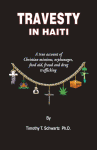
nTravesty in Haiti: A True Account of Christian Missions, Orphanages, Fraud, Food Aid and Drug Trafficking” is not a new book, having been published in 2008.  However, it should be required reading for volunteers, missionaries and development workers interested in Haiti.  Drawing from his experiences as an anthropologist and consultant in the northwest, he describes how NGOs in the region caused serious harm in the name of development.  Schwartz is frustrated but not anti development – he is against dependency, corruption, and  disempowering the people we say we want to help.  You can read a preview and/or purchase his book on Amazon.  A few thoughts below.

IDB Grants $27 Million for Haiti Rural Land Tenure Program

  • Posted on: 26 April 2012
  • By: Bryan Schaaf

The Inter-American Development Bank (IDB) has announced a $27 million grant for a pilot program to improve land tenure security in northern and southern Haiti.  This grant could benefit up to 40,000 farmers and cut the costs of slow and inefficient land administration services.  More importantly, it could potentially be replicated and expanded elsewhere.  Land tenure reform may not be particularly sexy, but it is especially important for Haiti's long term development.  The full announcement follows.

World Bank's 2012 Priorities for Haiti: Education, Agriculture, Disaster Management

  • Posted on: 2 December 2011
  • By: Bryan Schaaf

While the World Bank has a mixed record in Haiti, it and the Inter-American Development Bank (IDB) remain two of the most important multilateral funders of its post earthquake reconstruction.  Yesterday, the World Bank announced $255 million in grants for Haiti which will be focused on strengthening education, agriculture, and disaster risk management – all of which are critical for Haiti’s long term development.  The World Bank press release follows.  More information about its activities in Haiti are available on the World Bank website.

Beyond Emergency Relief in Haiti (Groupe URD)

  • Posted on: 28 January 2011
  • By: Bryan Schaaf

Below is a stock-taking document by Groupe URD which highlights common themes from the many evaluations that have been carried out concerning the humanitarian response to the earthquake.  Chief among them are the importance of urban planning in cities, agricultural revitalization in the countryside, disaster preparedness throughout the country, and the need to focus on communities and institutions rather than individuals.  You can also learn more about URD's activities in Haiti here. 

Recovery and Agriculture in Haiti

  • Posted on: 11 September 2010
  • By: Bryan Schaaf

Regardless of the outcome of the upcoming elections, one hopes that promoting agriculture and rehabilitating the environment will be high priorities for the next administration.  Countries that import the majority of their food staples, as Haiti does, are vulnerable to price shocks when international food prices increase.  Rural development depends in large part upon making agriculture viable again.  This will require tackling environmental degradation, improving disaster preparedness, upgrading infrastructure and resolving long simmering land tenure issues. These challenges are difficult but not insurmountable.

2010 Haiti Donors Conference and the Way Ahead

  • Posted on: 2 April 2010
  • By: Bryan Schaaf

The 2010 Haiti Donors’ Conference concluded yesterday.  The last such conference was held almost a year ago under very different circumstances.  This was very much an international event with Brazil, Canada, the European Union, France, and Spain actively engaged.  Over 130 nations, NGOs, and other organizations participated.  Fifty nine pledged 9 billion, of which 5 billion will be for 2010 and 2011 – provided that these pledges actually become contributions which is not always the case.  As Phillipe Matieu of Oxfam puts it, “…pledges need to turn into concrete progress on the ground.  This cannot be a VIP Pageant of half promises.”   Below is a summary of what we know about the way ahead as of April 1st.

Pages